You lower a truck insurance premium by looking like a smaller risk to the underwriter: drivers with clean records, few or no claims on your loss runs, good roadside inspections and safety controls you can document. Making sure the policy is rated correctly, choosing deductibles you can afford, and having an agent shop several trucking markets also help. How much each step saves varies by insurer.
There is no trick that works for every carrier. Below are the levers that actually move the price, starting with the ones you control today.
What do underwriters look at when they price my truck insurance?
Every trucking insurer has its own rating model, but the inputs are similar:
- Drivers: age, years of CDL experience and the motor vehicle record (MVR) of every driver you list.
- Loss history: your loss runs, often for the last three to five years (it varies by insurer), including how often claims happen and how large they were.
- Time in business: how long the authority has been active and whether the owner has prior trucking experience.
- Safety record: roadside inspections, out-of-service rates and the FMCSA Safety Measurement System data that anyone can look up by DOT number.
- Operation: radius, states and lanes, commodities, equipment type and value, and where the trucks are garaged.
You can't change all of these quickly, but several are fully in your hands.
Is my policy rated correctly?
This is the first thing to check because it costs nothing. Look at the declarations page and the schedules:
- Are trucks or trailers you sold still listed?
- Is the radius or the list of states wider than you really run?
- Are the commodities listed the ones you haul now, or something from an old application?
- Is the stated value on each truck close to what the truck is worth today? Physical damage is priced on that value.
- Are former drivers still on the driver schedule?
Any change must be true and documented. Under-reporting units, radius or cargo to get a lower price can leave you without coverage when a claim comes in.
Will a higher deductible lower my premium?
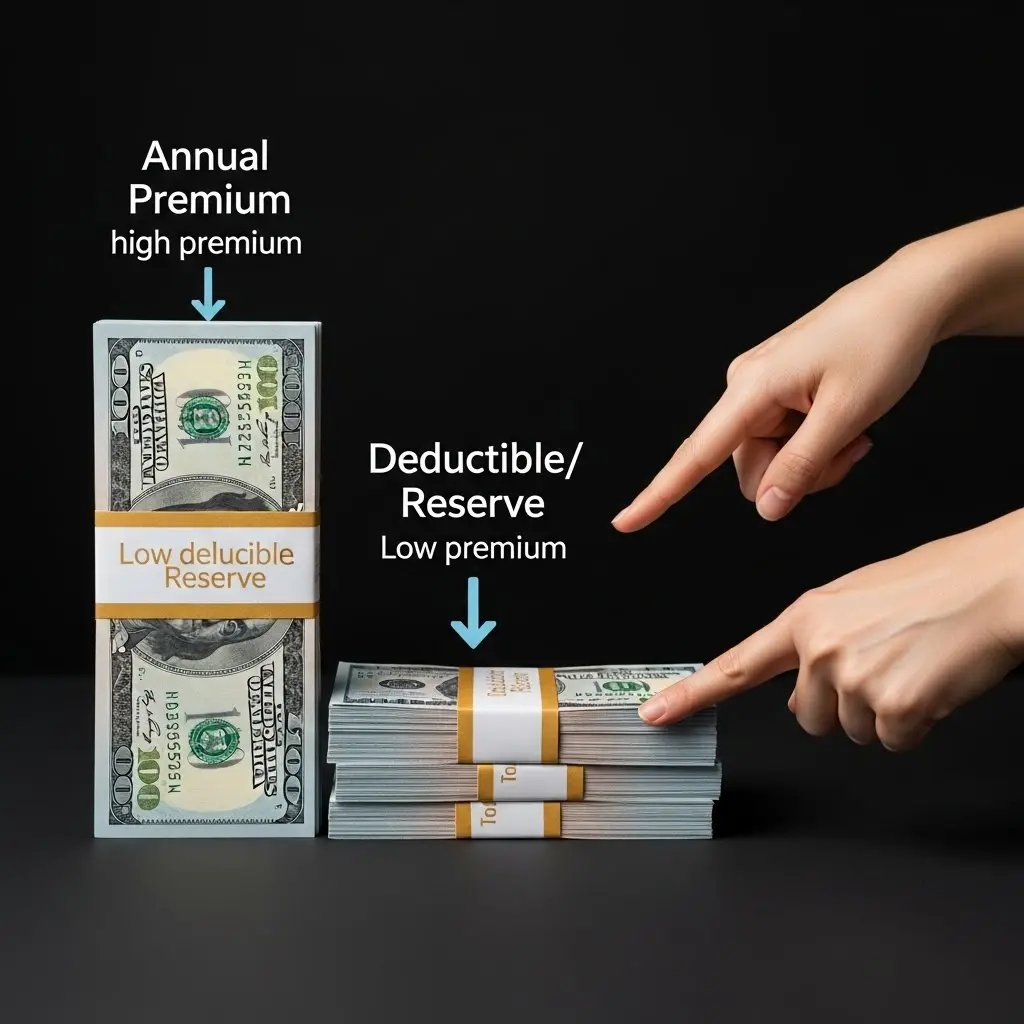
Usually yes, for physical damage and cargo. A higher deductible means you pay more of each small loss, so the insurer charges less. The trade-off is cash: if you choose a higher deductible, keep that amount set aside so a single claim doesn't stop the truck. Whether liability carries a deductible varies by insurer, so the deductible lever mostly applies to your own equipment and the freight.
Does who I hire really make a difference?
Yes. Each driver on the schedule is rated, and one driver with recent violations or an at-fault accident can raise the price for the whole policy or be excluded by the insurer. Before you hire, ask your agent what the insurer accepts (age, CDL experience, MVR), and run the MVR before the driver's first load. Keep driver qualification files complete; they matter both in a DOT audit and when an underwriter asks for them.
Can dashcams and telematics lower my insurance?
Some insurers offer programs or credits for forward-facing cameras or telematics, and some require them for certain risks. Even where there is no direct credit, video often settles who was at fault in a crash, which keeps claims off your loss runs. Ask each market what it offers rather than assuming a discount.
Should I pay in full or finance the premium?
Many trucking policies can be financed with a down payment and monthly installments, but premium finance companies charge interest and fees. If you can pay in full, the total cost is usually lower. If you finance, never let an installment go late: a cancellation notice for non-payment is filed with FMCSA and can put your authority at risk.
When should I start shopping my renewal?
Start well before the renewal date, and ask your agent how much lead time its markets need. Underwriters need current loss runs, a driver list, a unit list and your mileage, and a complete submission usually gets better attention than a rushed one. Starting early also gives you time to compare offers instead of taking whatever arrives the day before the policy ends.
What usually makes things worse?
- A lapse in coverage, even for a few days.
- Frequent small claims you could have paid yourself.
- Adding drivers without checking that the insurer accepts them.
- Hauling commodities the policy doesn't list.
If your premium went up at renewal and you don't know why, read why truck insurance gets so expensive. For the safety side, see how CSA scores and safety affect insurance.
Frequently asked questions
What is the fastest way to lower my truck insurance?
Check that the policy is rated correctly first: radius, commodities, the trucks and trailers listed, stated values and the drivers on the schedule. Removing a unit you sold or correcting a radius that is wider than you really run can change the price right away. Bigger changes, such as a cleaner loss history, take time.
Does a higher deductible always lower the premium?
It usually lowers the physical damage and cargo part of the premium, but how much depends on the insurer. Only raise a deductible to an amount you could pay out of pocket the day after a loss.
Will my insurance go down after a year with my own authority?
It can, because many insurers treat carriers with at least a year or two of history differently from brand-new authorities. A clean first year with no claims and good inspections gives the underwriter something to work with, but no insurer has to lower the price.
Can I lower my premium by dropping coverage?
You can drop optional coverages, but federal filings, lender requirements and broker contracts set the floor. Dropping physical damage on a financed truck or cargo that your brokers require usually costs more in lost loads or force-placed coverage than it saves.
Sources
- FMCSA – Safety Measurement System (SMS) and CSA BASICs – accessed Nov 7, 2026
Coverage depends on the policy terms; this is general information, not advice.
Want a second look at your renewal?
Send us your current policy, loss runs and driver list. We'll review how it's rated and look for options with trucking markets.
Start my quote