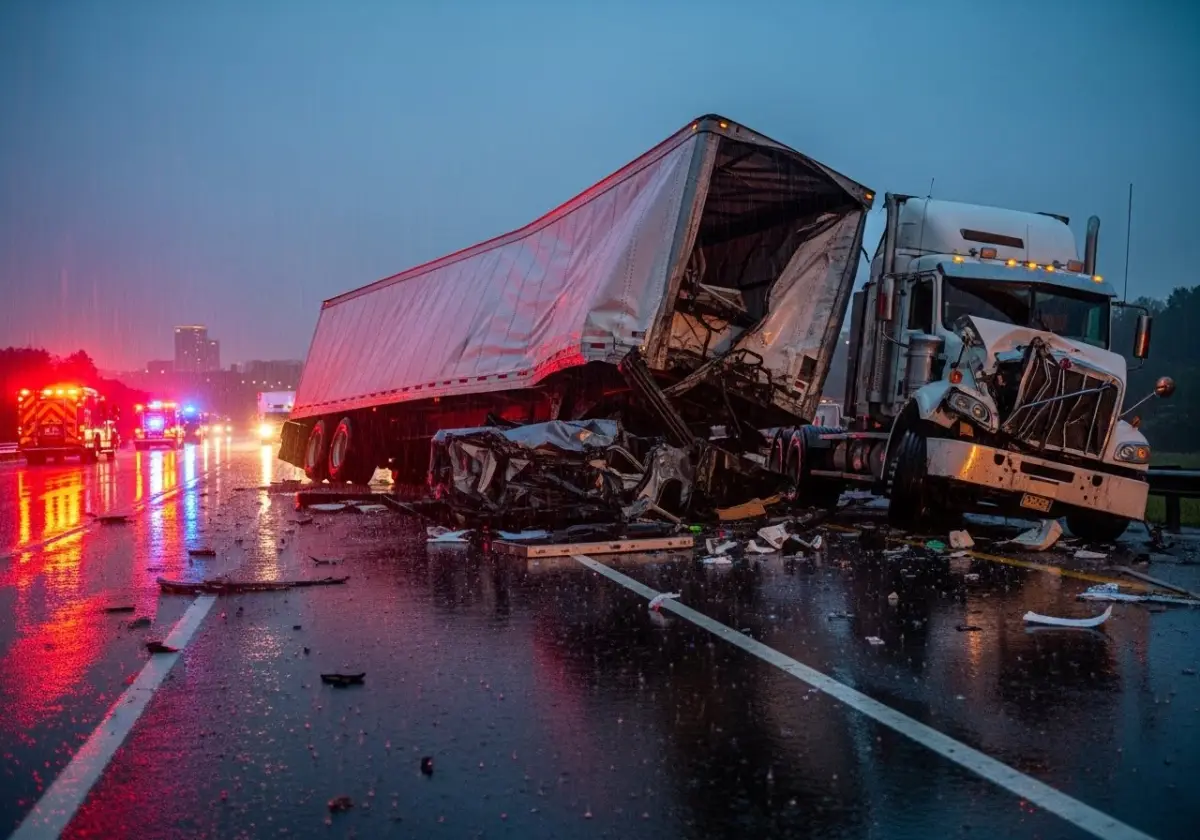
The MCS-90 is a federal endorsement attached to a motor carrier's auto liability policy. It requires the insurer to pay final judgments to members of the public for bodily injury, property damage and environmental cleanup caused by the carrier, up to the federal minimum, in many cases where the policy itself wouldn't cover the loss. It protects the public, not the carrier: if the insurer pays only because of the MCS-90, the carrier has to pay it back.
Why does the MCS-90 exist?
Federal law requires interstate for-hire carriers, and carriers of certain hazardous materials, to have minimum financial responsibility before they operate (49 CFR 387.7). A normal insurance policy has exclusions and conditions, such as an unlisted truck, an excluded driver or a late premium payment. The MCS-90 keeps many of those from leaving an injured person without payment up to the federal minimum. Courts differ on exactly when it applies, for example on whether the trip was interstate and whether other insurance pays first.
What does the MCS-90 cover?
Based on the wording of Form MCS-90 (published on FMCSA's MCS-90 page), the insurer agrees to pay, within the required limits, any final judgment against the carrier for public liability resulting from the operation, maintenance or use of its motor vehicles. In plain words:
- Covered: bodily injury and property damage to others, and environmental restoration such as a fuel or hazmat cleanup.
- Regardless of: whether the vehicle is listed on the policy, and whether the truck was on an authorized route.
- Not covered: injury to the carrier's own employees, and the cargo.
The limits apply separately to each accident. If the insurer doesn't pay a final judgment, the injured party can sue the insurer directly.
When does the carrier have to reimburse the insurer?
This is the part carriers often miss. The endorsement says the policy's own terms still apply between you and the insurer. If the insurer pays a judgment only because of the MCS-90, or because you broke a policy condition, you must pay the insurer back. Examples where that can happen:
- a driver the insurer excluded caused the crash;
- the truck involved wasn't on the policy and wasn't reported;
- the operation or cargo was outside what the policy covers.
So the MCS-90 is not extra coverage for you. It's a promise to the public that can turn into a debt for your business. Keep your driver and unit lists current with your insurer.
Is the MCS-90 the same as a BMC-91X?
No. The BMC-91X (or BMC-91) is the filing your insurer sends to FMCSA to prove you have coverage for your operating authority. The MCS-90 is attached to the policy and defines the insurer's promise to the public. Most interstate for-hire carriers have both: the filing in FMCSA's records and the endorsement on the policy.
Who needs an MCS-90?
- For-hire motor carriers of property operating in interstate commerce in vehicles of 10,001 lbs GVWR or more.
- Carriers of the hazardous materials listed in 49 CFR 387.9, including some private and intrastate carriers; certain listed hazmat requires it even in lighter vehicles (49 CFR 387.3(c)).
Carriers that meet the requirement with a surety bond use Form MCS-82 instead, and carriers that qualify can apply to FMCSA to self-insure. FMCSA's page notes the MCS-90 attaches to the liability policy, not to individual vehicles, and covers the vehicles under that policy that are subject to the federal rules.
How much does the MCS-90 cover?
The federal minimum for your operation: $750,000 for general freight in trucks rated at 10,001 lbs or more, and $1,000,000 or $5,000,000 for hazardous materials (49 CFR 387.9). If your policy limit is higher, the policy covers the rest under its normal terms. See how much liability FMCSA requires.
Where do I keep it, and who asks for it?
Keep a copy at your principal place of business. Under 49 CFR 387.7, the proof of financial responsibility must be available on reasonable request, and it's public information. DOT auditors may ask for it in a new entrant safety audit or a compliance review. Your policy documents from the insurer include it; ask your agent if you can't find it.
What happens if the policy is cancelled?
Between you and the insurer, a policy with the MCS-90 can be cancelled by either side with 35 days' written notice (49 CFR 387.7). The FMCSA filing has its own 30-day cancellation notice to FMCSA. Make sure a replacement policy, with its own MCS-90 and filing, is in place before the old one ends. Without it you can't legally operate, and your authority is at risk; see what insurance keeps your MC number active.
Frequently asked questions
What does the MCS-90 cover?
It requires the insurer to pay final judgments against the motor carrier for public liability, meaning bodily injury, property damage and environmental restoration caused to others, up to the federal minimum. It doesn't cover the carrier's own employees or the cargo.
Does the MCS-90 protect the trucking company?
No. It protects the injured public. If the insurer pays only because of the MCS-90, for a loss the policy itself wouldn't have covered, the carrier must reimburse the insurer.
Is the MCS-90 a separate insurance policy?
No. It's an endorsement attached to your auto liability policy. It applies to the vehicles under that policy that are subject to the federal requirements, whether or not each vehicle is listed on the policy.
Who needs an MCS-90?
For-hire motor carriers of property in interstate commerce using vehicles of 10,001 lbs GVWR or more, and carriers of certain hazardous materials, including some private and intrastate carriers and some in lighter vehicles (49 CFR 387.3), must show financial responsibility. With insurance, the proof is the MCS-90; with a surety bond it's the MCS-82.
Do I need to keep a copy of the MCS-90?
Yes. Federal rules require the proof of financial responsibility to be kept at your principal place of business and made available on request. Auditors may ask for it in the new entrant safety audit.
Sources
- 49 CFR 387.7 – Financial responsibility required (eCFR) – accessed Nov 7, 2026
- 49 CFR 387.15 – Forms (eCFR) – accessed Nov 7, 2026
- FMCSA – Form MCS-90 endorsement (page updated Nov 25, 2025) – accessed Nov 7, 2026
- 49 CFR 387.3 – Applicability (eCFR) – accessed Nov 8, 2026
Coverage depends on the policy terms; this is general information, not advice.
Want a quote for your operation?
Tell us about your trucks, drivers, lanes and cargo. GuildRoad Insurance Agency shops trucking markets and explains the options in plain language.
Start my quote